
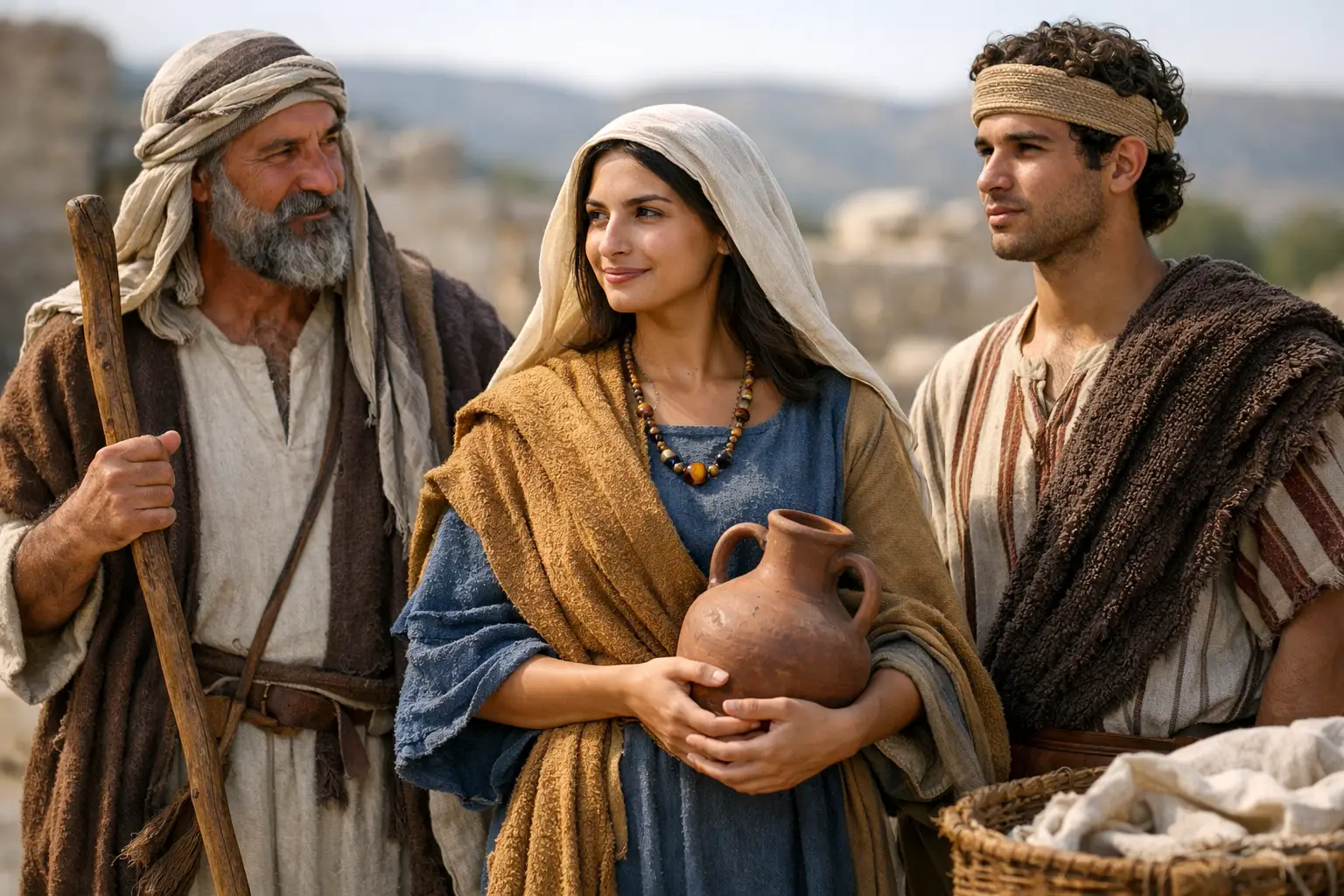
If you have ever paused while reading the Hebrew Bible and wondered what did ancient Israelites wear, you are asking exactly the right kind of question. Clothing in ancient Israel was never just background detail. A garment could signal poverty or honor, mourning or celebration, daily labor or priestly service. Once you begin noticing those details, many biblical passages become sharper, more human, and much more vivid.
The challenge is that the Bible does not give us a neat illustrated catalog. We have to piece the picture together from Hebrew vocabulary, archaeology, neighboring cultures, artistic depictions, and the social world behind the text. That makes the subject especially exciting, because it sits at the meeting point of language, history, and lived experience.
What did ancient Israelites wear in everyday life?
For most people, the basic outfit was simple. Men and women typically wore a tunic as the core garment. In Hebrew, one important word is kuttonet, usually understood as a tunic worn next to the skin. It was often made of wool or linen, depending on cost, region, and occasion. A poorer person might own only one main tunic, while a wealthier household could afford finer fabric and more than one change of clothing.
Over the tunic, many people wore a mantle or outer cloak. This outer garment mattered a great deal in daily life. It provided warmth at night, served as protection from wind and dust, and could even function as a blanket. That practical importance helps explain biblical laws about returning a poor person’s cloak by sunset. If you took that garment as collateral and kept it overnight, you were not merely inconveniencing someone. You were depriving them of essential covering.
Sandals were common, though not everyone would have had the same quality footwear. Leather sandals appear frequently in the ancient Near East, and they fit the climate and terrain of the land of Israel. Going barefoot also appears in biblical scenes, especially in contexts of mourning, humiliation, or urgent action.
Head coverings likely varied. Some people probably wrapped cloth around the head for protection from sun and dust, while others may have gone uncovered depending on activity, region, and social custom. Here, we should be careful. Popular imagination often fills in details more confidently than the evidence allows.
Fabric, climate, and the realities of the land
Ancient Israel’s clothing was shaped first by the land itself. Summers were dry and hot. Nights, especially in hill country or desert-edge regions, could turn cool. People needed clothing that could breathe in the heat but still protect them from sharp temperature shifts.
That is one reason linen and wool matter so much in the biblical world. Linen was lighter and cooler, while wool was widely available and useful for heavier garments. Cloth was valuable because producing it took real labor. Spinning, weaving, washing, and dyeing were time-intensive tasks. In other words, garments were not disposable consumer goods. They represented work, skill, and family resources.
This helps modern readers understand why clothing appears in stories as a meaningful gift, spoil of war, sign of status, or object of pledge. A garment could carry social weight in a way that a T-shirt from a department store simply does not.
Men’s and women’s clothing – similar basics, meaningful differences
The basic silhouette of male and female clothing in the ancient Levant was often more similar than modern Western readers expect. Both men and women wore draped or sewn garments built around tunics and outer wraps. The difference usually lay in length, decoration, fabric quality, and social presentation rather than in completely separate categories of dress.
Women’s garments may have been longer and, in some settings, more ornamented. Jewelry also played a significant role. Bracelets, nose rings, earrings, and pendants appear in biblical and archaeological contexts. These items were not merely decorative. They could indicate family wealth, marital status, regional custom, or participation in festive life.
Men engaged in labor might gird up their garments for movement. This phrase in English translations reflects a very physical act. Long clothing could be tucked up and secured for travel, work, or battle. It is one of those details that reminds us biblical clothing was designed for a world of walking, farming, herding, carrying water, and moving across uneven ground.
What clothing said about status and identity
In biblical narrative, clothing often reveals rank. Fine garments distinguished the wealthy and powerful. Special robes could mark a person out for honor, office, or family favor. Joseph’s famous garment is a good example, even though the exact meaning of the Hebrew expression is debated. The point in the story is clear enough – the garment signaled distinction, and that distinction intensified conflict.
Kings, officials, and priests wore clothing that ordinary laborers did not. Elite garments could include finer weaving, richer dyes, embroidered elements, or imported materials. Yet even here, caution is wise. Not every colorful robe in children’s Bible art reflects a secure historical reconstruction.
Mourning also had a dress language. Tearing garments, wearing sackcloth, removing sandals, or going with diminished adornment communicated grief, repentance, or distress. Clothing in ancient Israel was deeply social. It told others what season of life a person was in.
Priestly garments and sacred meaning
If everyday clothing opens a window into ordinary life, priestly clothing opens a window into Israel’s theology. The priestly texts of the Torah describe sacred vestments in striking detail. Linen tunics, sashes, turbans, and, for the high priest, highly elaborate items such as the ephod, breastpiece, and robe all carried symbolic significance.
These garments were not fashion statements. They marked consecration, order, and holiness. They visually set apart the priestly role within Israel’s worship. The use of fine linen, precious stones, gold elements, and carefully structured design reflects a world in which clothing could embody sacred service.
This is also where Hebrew study becomes especially rewarding. Terms like ephod, me’il, and kuttonet are not interchangeable labels. Each word belongs to a particular ritual and textual context. Reading them in Hebrew helps us feel the precision of the biblical writers.
Archaeology helps, but it does not answer everything
When asking what did ancient Israelites wear, archaeology gives us clues rather than a complete wardrobe. Textiles rarely survive well, so evidence often comes indirectly from loom weights, spindle whorls, textile fragments in unusually dry conditions, figurines, seals, murals from neighboring cultures, and inscriptions.
That means reconstruction always involves some interpretation. We know weaving was central to household economy. We know wool and linen were used. We know jewelry, belts, sandals, and cloaks mattered. We know special garments marked rank and ritual office. But precise cuts, colors, and local variations are sometimes harder to pin down than popular illustrations suggest.
That uncertainty is not a weakness. It is part of responsible historical reading. Good scholarship does not pretend to know more than the evidence allows.
Why biblical clothing laws matter
Some laws in the Torah make more sense when you understand clothing as part of covenant life. Instructions about mixed fibers, tassels, priestly fabrics, and proper covering are not random dress codes floating free of culture. They belong to a world where clothing touched identity, holiness, labor, and boundary-making.
Take tassels, for example. They served as a visible reminder of covenant obedience. This is clothing as memory device. It is a beautiful example of how material culture and spiritual formation met in daily life.
That should sound familiar to anyone who loves Biblical Hebrew, because Hebrew words themselves often work the same way. They are not abstract data points. They carry memory, practice, and meaning accumulated across generations.
Reading the Bible with better eyes
Once you begin noticing garments in the text, many scenes come alive. A cloak spread on the road before a king, sackcloth worn in repentance, a widow’s garments, a priest’s linen attire, sandals removed on holy ground – all of these details are part of the storytelling. They shape the emotional and theological force of the passage.
This is one reason contextual study matters so much. Language study is not only about parsing verbs. It is about entering the world of the text with more care and more joy. At Biblical Hebrew Teacher, that larger world of ancient Israel is part of what makes learning Hebrew such a rich and deeply rewarding journey.
Ancient Israelite clothing was practical, symbolic, and profoundly human. It protected the body, expressed social reality, and sometimes carried sacred meaning. When we pay attention to those garments, Scripture stops looking like a flat page from a distant past and begins to feel like the lived world it truly was. And that is often where deeper understanding begins.